Duplicate invoice books, triplicate or 4-part: which do you need?
2-part, 3-part or 4-part NCR books explained: who keeps which copy, numbering, A6 or A5, books, pads or loose sets, and how many to order for a year of jobs.
On this page 10 sections
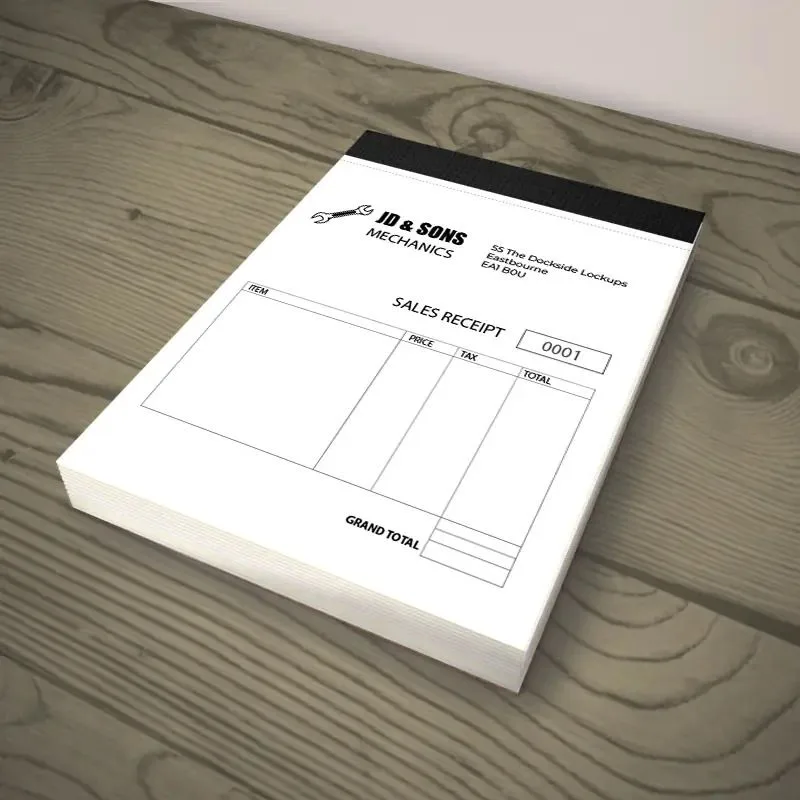
Duplicate invoice books give you two copies of every invoice you write, one for the customer and one that stays in the book, and for most sole traders and small firms that is all you need. Triplicate (3-part) books add a third copy for the office or a second site, and 4-part books add a fourth for jobs where paperwork goes to several places.
This guide explains how to choose the number of parts, the size, the format and the quantity, so the books you order suit the way you actually work.
How NCR invoice books work #
NCR stands for “no carbon required”. Each set is two or more sheets of specially coated paper. When you write on the top sheet, the pressure transfers your writing to the sheets underneath, with no carbon paper. Our knowledge base explains the paper itself in what is NCR paper.
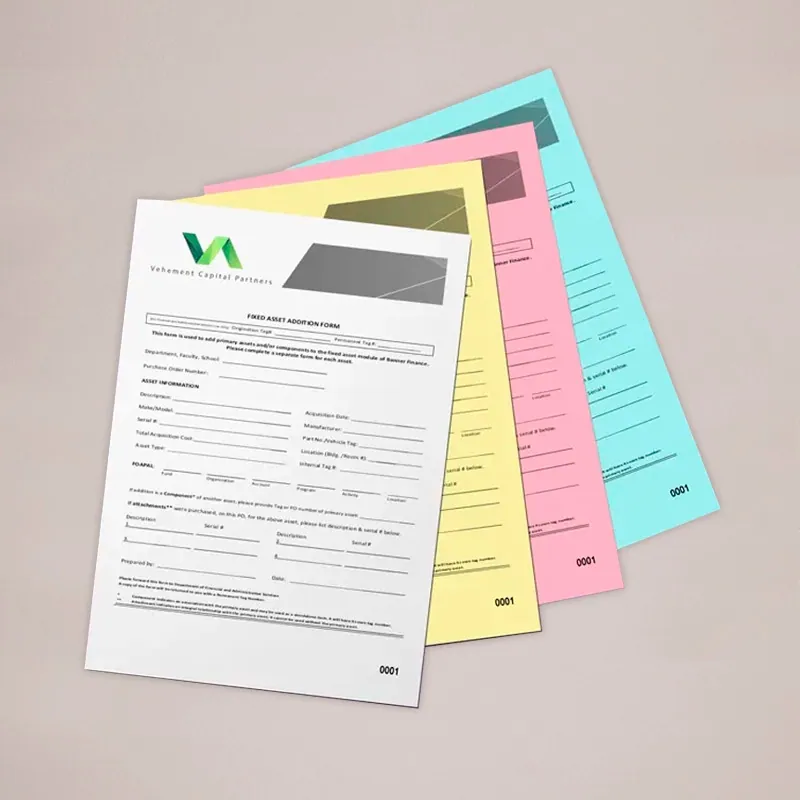
Our NCR invoice books have 50 numbered sets per book, stitched and taped along the short edge with a white cover. The top copy is always white; the copies below are yellow, then pink, then blue.
Duplicate, triplicate or 4-part #
| Parts | Copies | Typical use |
|---|---|---|
| 2-part (duplicate) | White, yellow | Customer gets white, you keep yellow in the book |
| 3-part (triplicate) | White, yellow, pink | Customer gets white, office gets yellow, pink stays in the book |
| 4-part | White, yellow, pink, blue | Customer, office, accounts and the book, or a main contractor as well |
Ask one question: where does each copy go? If the answer is “customer and me”, duplicate invoice books are right. If an office, a bookkeeper or a main contractor also needs a paper copy, add a part for each of them. Do not add parts you will throw away; every extra sheet makes the book thicker and the bottom copy fainter.
Why numbering matters #
Every set in our invoice books is numbered. Sequential numbers make it easy to spot a missing invoice, to match payments to jobs and to answer questions from a customer or an accountant months later. HMRC expects businesses to keep records of sales, and the gov.uk guide to business records if you are self-employed sets out how long to keep them. A numbered book is a simple way to show a complete record.
If you use more than one book at a time, for example one per van, ask us before you order if you need the numbering to start from a particular number, so each book carries on from the last.
Size: A6 or A5 #
- A6 (105 × 148 mm) fits a jacket pocket or a van door pocket. Good for simple receipts, delivery notes and short invoices.
- A5 (148 × 210 mm) is the most popular size for trade invoices. It has room for a description of the work, materials, a total and your payment details, and still fits a glovebox.
If you need A4, for job sheets or detailed quotes, look at NCR pads, which come in A6, A5 and A4.
Books, pads or loose sets #
- Books are bound at the side with a cover, and the bottom copy stays in the book. Best for invoices and receipts, where you want a permanent record in one place.
- Pads are glued along the top with a card backing. Sheets tear off, so every copy can be sent somewhere. Good for job sheets and order forms.
- NCR sets are loose sets, not bound, from 50 up to 5,000. Useful for forms that go through a printer or are filed in folders.
Black or full colour #
The printing on each copy can be black only or full colour on the front. Black is clean and easy to read. Full colour lets you use your logo in its proper colours, which looks more professional on the customer’s copy and matches your van and your business cards.
How many duplicate invoice books to order #
Work it out from your jobs. Each book has 50 sets. If you raise around 10 invoices a week, one book lasts about five weeks, so ten books cover roughly a year. Order enough for six months to a year: the price per book usually drops with quantity, but you do not want boxes of old books if your address, phone number or bank details change.
Books are made to order and take around 10 working days to dispatch on the standard option, so reorder when you open your second-to-last book, not your last.
Filling them in so every copy is readable #
- Use a ballpoint pen and press firmly. Gel pens and felt tips do not carry through to the lower copies.
- Slip a piece of stiff card under the set you are writing on. It stops your writing marking the next set in the book, which is easy to forget until a customer spots an old job showing through their invoice.
- Write on a hard surface. A clipboard or the book’s own cover, not your knee.
- Keep books out of the sun and heat. A hot dashboard can mark NCR paper.
With 4-part books, the bottom copy is always the faintest. If it is hard to read, that is usually a sign the job needs fewer parts.
Duplicate invoice books and invoicing apps #
Plenty of trades now invoice from an app, and still carry duplicate invoice books in the van. The book is instant, needs no signal or battery, and gives the customer something in their hand before you leave. Many firms write a quick book invoice or receipt on the doorstep and then enter it into their accounts later, using the book number as the reference. If you work this way, 2-part duplicate invoice books are usually enough, because your software keeps the office copy.
What to print on the book #
Print everything that stays the same on every invoice, so you only write what changes. That usually means your business name and logo, address, phone and email, company number and VAT number if you have them, payment terms and bank details, plus boxes for date, customer, description, quantity, price and total. Our guide on what to put on an invoice goes through each item, and our FAQ covers artwork and delivery.
You can design duplicate invoice books in our online designer from ready-made layouts, or upload your own. For more, see all invoice books and pads. UK mainland delivery is £7.95 per order and free when your goods total is £99 or more after discount codes.