
Warning Signs29 products
Warning signs alert people to a hazard they cannot see or might not expect, and this range is for warehouses, factories, kitchens, plant rooms and public buildings. It has 29 caution and danger designs, from fork lift trucks, reversing vehicles and trip hazards to slippery surfaces, hot water, laser beams and restricted hazardous areas. Symbol signs use the ISO 7010 yellow triangle, and the designs come in 3mm Foamex, 3mm Dibond aluminium composite or self-adhesive vinyl.
- CCTV and Security Signs 32
- Chemical and Hazard Signs 25
- Door and Information Signs 20
- Electrical Safety Signs 17
- Fire Safety Signs 12
- Kitchen and Machinery Signs 5
- Mandatory Signs 20
- Prohibition Signs 14
- Recycling and Waste Signs 17
- School, Park and Community Signs 29
- Warehouse and Stock Signs 15
- Warning Signs 29
- Washroom and Hygiene Signs 28
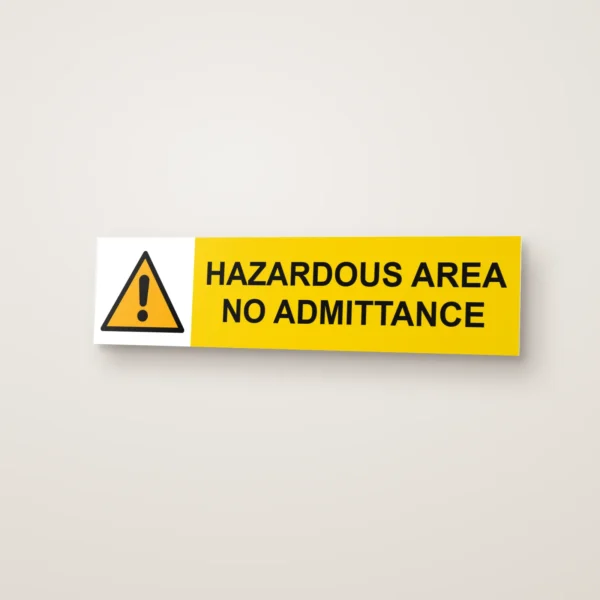
Hazardous Area No Admittance Sign
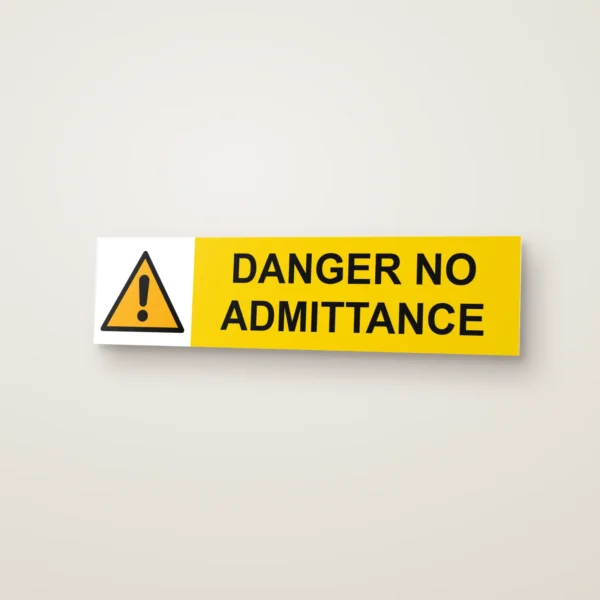
Danger No Admittance Sign
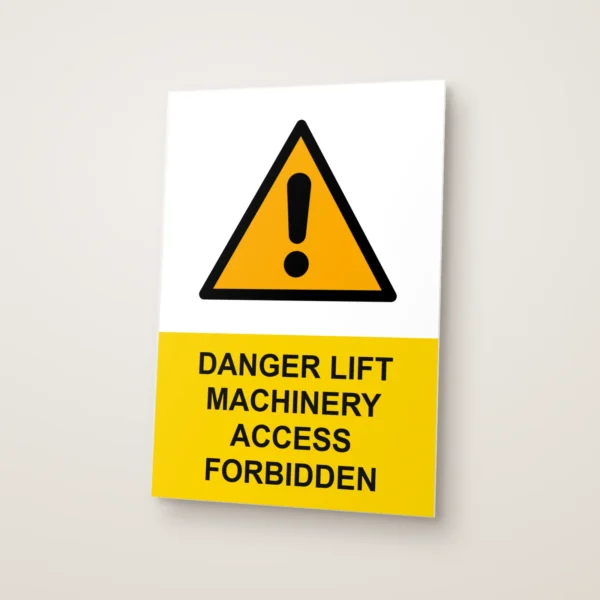
Danger Lift Machinery Access Forbidden Sign
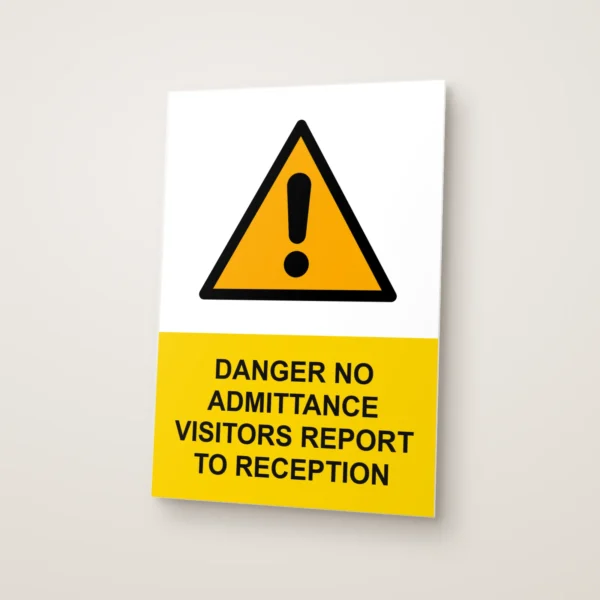
Danger No Admittance Visitors Report to Reception Sign
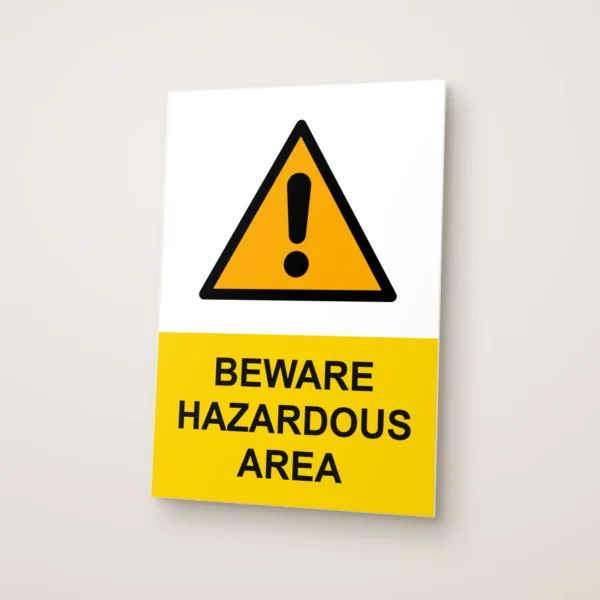
Beware Hazardous Area Sign
Warning Signs: questions answered
What colour are warning signs?
Warning signs use a yellow triangle with a black border and a black symbol. The yellow tells people to take care because there is a hazard. The format is set by the Health and Safety (Safety Signs and Signals) Regulations 1996 and the symbols come from ISO 7010.
What is the difference between a caution sign and a danger sign?
Both are warning signs. Caution is used for most hazards, such as trip hazards or forklift trucks. Danger is used for a more serious risk, such as very hot water or a restricted hazard area. Your risk assessment tells you which fits.
Which forklift warning sign should I use?
Caution Fork Lift Trucks and Warning Beware of Moving Vehicles both use the ISO 7010 W014 symbol for general areas. Caution Forklifts Blind Corner suits a corner where drivers and pedestrians cannot see each other. Use A2 or A1 where people need to see it from a distance.
What size warning sign do I need?
A4 reads at about 8 m, A3 at 12 m, A2 at 17 m and A1 at 24 m. Pick the size that can be read from where people first approach the hazard, and go a size up in poor light.
Are warning signs suitable for outdoor use?
Yes, in 3mm Dibond aluminium composite, which stays flat outdoors and does not rot or rust. That suits ice warnings, yard vehicle signs and plant room doors. Foamex and vinyl are intended mainly for indoor walls, doors and equipment.
Guides for safety signs
Safety sign colours, shapes and ISO 7010 explained
What each safety sign colour and shape means, what ISO 7010 codes are, what the law expects, and how to choose the right size.
Read the guideBuying guideFoamex vs Dibond vs Correx: choosing a sign board
The three most common sign boards compared, and which to choose for indoor, long-term outdoor and temporary signs.
Read the guide