COSHH symbols: the 9 hazard pictograms explained
What each of the nine red-diamond hazard pictograms means, COSHH in plain terms, and which yellow warning signs go on chemical stores and cupboards.
Last updated
COSHH symbols are the nine hazard pictograms you see on chemical containers: a black symbol on a white background inside a red diamond. They come from the GHS system (used in Great Britain through the GB CLP Regulation) and each one tells you the type of danger, from flammable to corrosive to harmful to the environment. The same hazards are shown on workplace walls and store doors with yellow ISO 7010 warning signs.
Below is what each of the nine pictograms means, what COSHH asks of employers in plain terms, and where hazard signs should go. This is general information, not legal advice: your COSHH assessment and the product’s safety data sheet are what you work from.
The nine COSHH symbols and what they mean #
| Code | Pictogram | Hazard | Typical products |
|---|---|---|---|
| GHS01 | Exploding bomb | Explosive: may explode from fire, shock or friction | Fireworks, some ammunition, certain reactive chemicals |
| GHS02 | Flame | Flammable: gases, aerosols, liquids or solids that catch fire easily | Solvents, petrol, spray paints, lighter fuel |
| GHS03 | Flame over a circle | Oxidising: can cause or intensify a fire by giving off oxygen | Some bleaching agents, oxygen, certain pool chemicals |
| GHS04 | Gas cylinder | Gas under pressure: may explode if heated; cold gases can cause burns | Gas bottles, oxygen and nitrogen cylinders |
| GHS05 | Liquid eating into a hand and a surface | Corrosive: burns skin, damages eyes, eats into metals | Drain cleaners, strong acids and alkalis, battery acid |
| GHS06 | Skull and crossbones | Acute toxicity: can be fatal or toxic in small amounts | Some pesticides, certain industrial chemicals |
| GHS07 | Exclamation mark | Health hazard: harmful, irritant, may cause allergic skin reactions or drowsiness | Many cleaning products, some adhesives |
| GHS08 | Person with a star on the chest | Serious health hazard: may cause cancer, harm breathing, affect fertility or organs | Some solvents, certain fuels, some dusts |
| GHS09 | Dead tree and fish | Hazardous to the environment: toxic to aquatic life | Some pesticides, certain oils and biocides |
A product label will also carry a signal word, “Danger” for the more severe hazards or “Warning” for the less severe, plus hazard statements and precautions. One product can carry several pictograms.
Old orange COSHH symbols
Before the GHS pictograms, chemicals in the UK and EU carried black symbols on orange squares. They were phased out of product labels over several years and are no longer used on new supplies. If you still have old stock with orange labels, check its current safety data sheet, as the classification may have changed.
COSHH in plain terms #
COSHH is the Control of Substances Hazardous to Health Regulations 2002. It applies to employers wherever people work with, or are exposed to, hazardous substances: chemicals, fumes, dusts, vapours, mists, gases and biological agents. In outline, the employer must:
- find out which substances are used or produced, and what harm they can cause;
- assess the risk to employees and anyone else affected;
- prevent exposure, or where that is not reasonably practicable, control it adequately;
- make sure controls are used and maintained, and monitor exposure or health where required;
- plan for accidents and emergencies;
- give staff information, instruction and training.
The HSE COSHH pages explain the duties in full and include free guidance for many trades. Some substances, including asbestos and lead, have their own separate regulations.
COSHH symbols on labels, warning signs on walls #
This is where people often get confused. The red-diamond COSHH symbols belong on containers and in safety data sheets. They are applied by the supplier and tell you about the product in your hand.
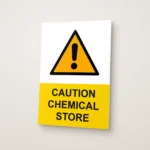
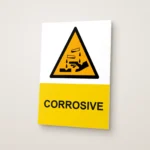
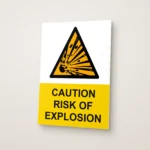
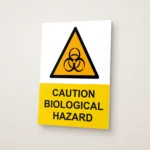
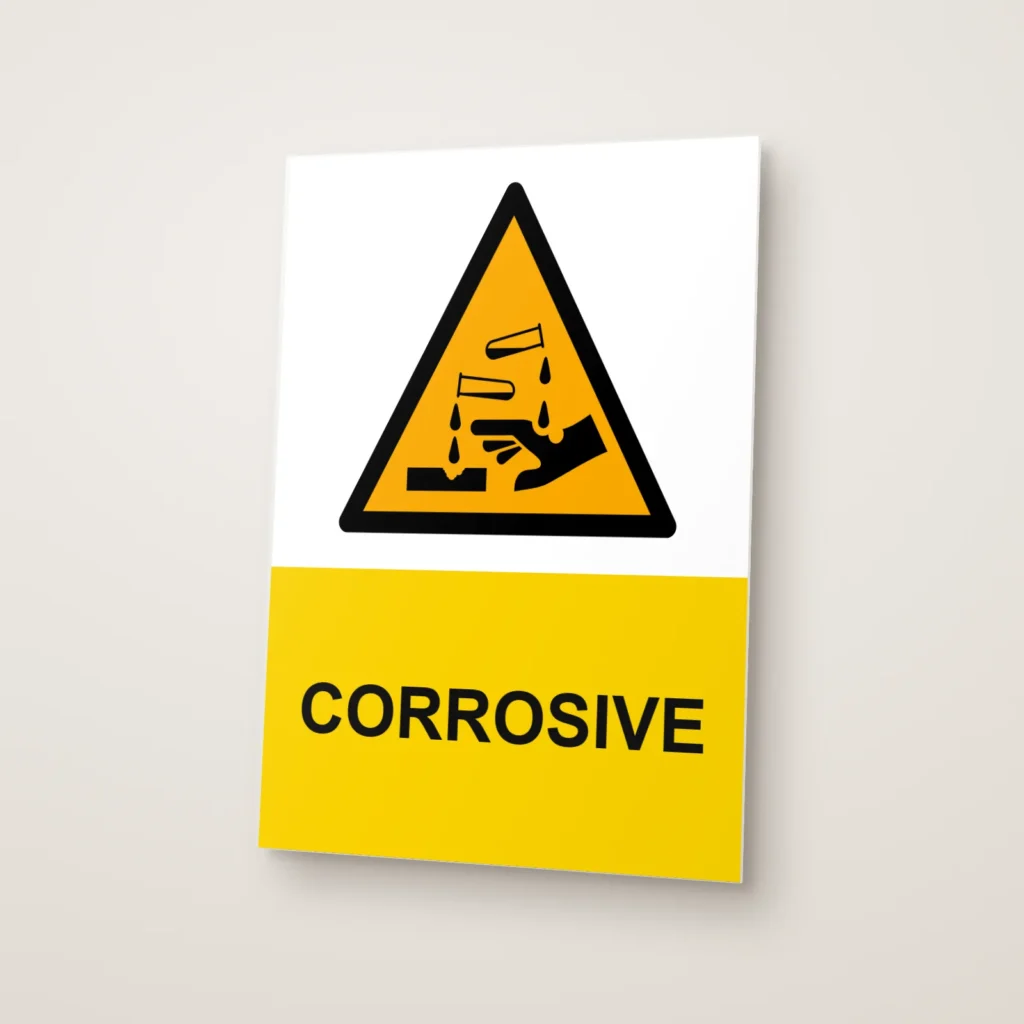
Signs on doors, cupboards, cages and store rooms follow the safety sign colours and shapes system instead: a yellow triangle with a black border and symbol. ISO 7010 has warning symbols that match many of the hazard types, such as W002 for explosive material, W009 for biological hazard and W023 for corrosive substances, plus W001, the general warning sign, used with text where no specific symbol fits. Our safety signs law article explains when these signs are required.
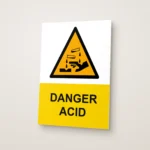
So a store holding acids might have a yellow corrosive triangle on the door, while each bottle inside carries the red-diamond GHS05 pictogram on its label. Both tell the same story in the right place.
Where hazard signs should go #
- Chemical stores and cupboards: on the door, at eye level, so the warning is seen before anyone opens it. A caution chemical store sign is the usual general choice.
- Specific hazards: use the sign that names the hazard where one fits, such as a corrosive sign for acid stores or a risk of explosion sign where explosive atmospheres may occur.
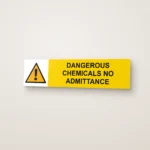
- Restricted areas: add a no-admittance sign where only trained people should enter. Dangerous chemicals no admittance signs come in slim door sizes from 200 × 50 mm.
- Battery charging and gas areas: these have their own signs in our range, because the risks (explosive gases, acid) are specific.
- Outdoor cages and yards: choose Dibond so the sign stays readable in the weather.
Keep COSHH symbols and signs up to date. When a substance is no longer stored, take its sign down, because out-of-date warnings teach people to ignore signs.
Choosing the signs #
Our chemical and hazard signs are made in A4 (210 × 297 mm), A3 (297 × 420 mm), A2 (420 × 594 mm) and A1 (594 × 841 mm) on most designs, from £5.28, in 3 mm Foamex, 3 mm Dibond aluminium composite or self-adhesive vinyl. Vinyl suits smooth cupboard doors and metal cabinets; Foamex suits indoor walls; Dibond suits outdoor stores. Standard turnaround is 4 working days to dispatch, or 2 on Express, and the ISO code for each sign is shown on its product page.
We make signs; we do not supply GHS container labels, and we cannot tell you which hazards apply to a product. That comes from the supplier’s safety data sheet and your COSHH assessment. If you know the hazard and need a sign we do not list, contact us or call 0161 315 1151.