Temporary shop sign: what to put up while you wait for the real one
Opening before the fascia is ready, refitting, or running a pop-up? The options for a temporary shop sign, from a banner over the old fascia to boards and window graphics.

On this page 10 sections
A temporary shop sign bridges the gap between getting the keys and getting a permanent fascia, and for most shops the quickest answer is a printed banner fixed over the old sign. Permanent fascias can take weeks to design, approve and fit; a banner or a printed board can be up within days and costs far less, so you are never trading under the previous tenant’s name.
Here are the options, when each one makes sense, and how to fit them neatly.
When you need a temporary shop sign #
- New tenancy. You open before the permanent fascia is made, or the old sign is still up.
- Refit or rebrand. The shop stays open while the front is being redone.
- Pop-up shop. You are only in the unit for weeks or months, so a permanent sign makes no sense.
- Waiting for consent. An illuminated or larger permanent sign may need advertisement consent, and you want something up while you wait.
- Damage. The fascia has been damaged and needs replacing.
In every one of these cases the goal is the same: customers should see your name, not a blank board or someone else’s, from the first day you trade. A temporary shop sign that goes up in a week is worth more than a perfect permanent one that arrives in two months.
Option 1: a banner over the fascia #
A PVC banner cut to the size of the fascia and fixed over it is the most common temporary shop sign we see. It covers the old name completely, it is light enough to fix with screws and washers or cable ties, and it comes down cleanly when the permanent sign goes up.
How to size it: measure the fascia width and height at both ends, take the smaller figures, and order a custom size banner to match. A typical small shop fascia is long and shallow, so keep the design to your name and one line of what you sell. Choose hemmed edges and metal eyelets.
How to fix it: screws with large washers through the eyelets into a timber fascia, or cable ties to any existing sign brackets. Keep it flat; a banner that ripples across the front looks more temporary than it needs to.
Option 2: a rigid board #
If the temporary shop sign needs to stay up for a few months, a rigid board looks more finished than a banner. Two materials suit shop fronts:
- Foamex boards are light, smooth and easy to fix with screws or strong double-sided pads. They suit sheltered fascias and indoor signs.
- Dibond aluminium composite signs are rigid and weatherproof, and are what many permanent fascia panels are made from. Good if “temporary” might mean a year.
Both can be made to a custom size up to 2440 × 1220 mm, with drilled holes if you want them. For a wider fascia, use two or more boards butted together. Our guide to Foamex, Dibond or Correx compares the rigid materials.
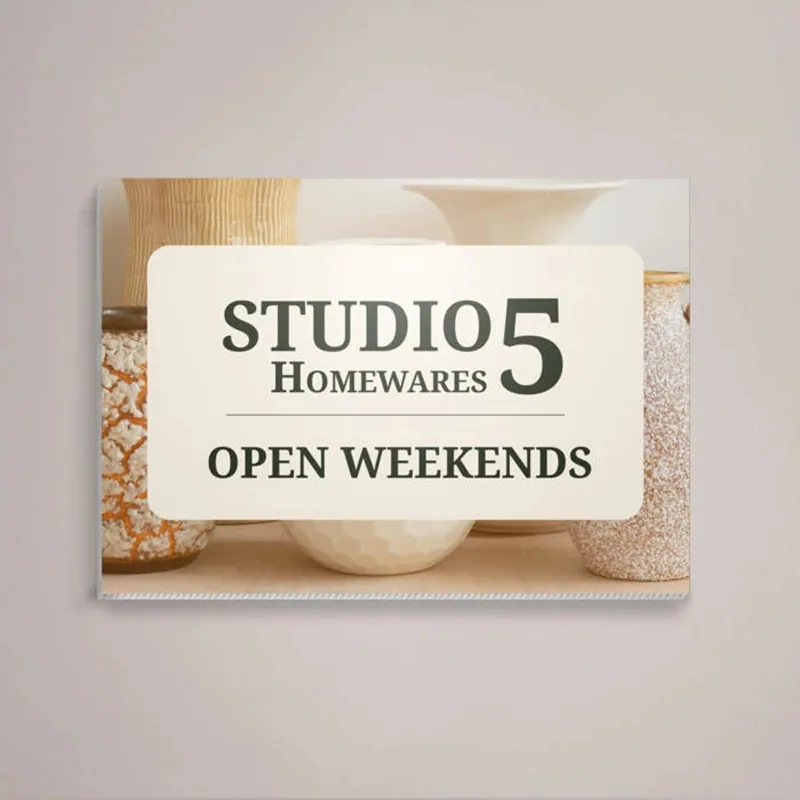
Option 3: window graphics #
If you cannot fix anything to the fascia, because the landlord says no or the old sign is illuminated and fragile, put the name in the window instead. Shop window graphics can carry your name, opening hours and a short line about what you sell, and they peel off when you are done.
A window graphic at eye level is also what people on the pavement see first, so it is worth having even when the fascia is sorted.
Option 4: a pavement sign #
An A-frame pavement sign is not a replacement for a fascia, but in the first weeks of trading it tells people you are open and what you do. Check with your council before putting one on a public pavement; many councils have rules or licences for pavement signs.
Option 5: a banner inside the window #
For a pop-up or a very short let, a banner hung inside the window from a rail or hooks is quick and needs no outside fixing at all. Face it outwards and keep the lettering big, because the glass adds reflections.
Which temporary shop sign to choose #
| How long | Best choice |
|---|---|
| Days to a few weeks | PVC banner over the fascia, or inside the window |
| A few months | Foamex board, or a banner with a board for the name |
| Possibly a year | Dibond panel |
| No fixing allowed outside | Window graphics and a pavement sign |
Permission and the landlord #
Check your lease before fixing anything to the building. Many leases control signs, and some landlords want to approve the design. For the planning side, the government guide to outdoor advertisements and signs explains what can usually go up without an application. A non-illuminated sign that replaces a similar sign in the same place is usually straightforward, but rules are stricter in conservation areas and on listed buildings.
Fitting it neatly #
A temporary sign only looks temporary if it is fitted badly. A few things make a big difference:
- Clean the fascia first. Dirt and old sticky residue stop pads sticking and show through thin materials.
- Mark a level line. Use a spirit level and a pencil line along the top before you fix anything. A sign that runs downhill is the first thing people notice.
- Fix the middle of the top edge first on a board, the corners first on a banner. Then work outwards.
- Cover the old name completely. If the old letters are raised, a board may sit unevenly; a banner pulled flat over them usually hides them better.
- Use a safe ladder or a platform. Fascias are at height, so get help and do not overreach.
Our guide on how to fix a sign to a wall covers fixings for brick, render and timber.
Design tips for a temporary shop sign #
- Match the design to your permanent sign if it is already designed, so customers see the same name and colours from day one.
- Put your name first and what you sell second. Opening hours and phone numbers belong in the window.
- Use large, bold lettering; a fascia is read from across the road.
- Keep text at least 5 cm in from the edges of a banner, where the eyelets go.
Our article on shop signage for small retailers covers the permanent signs that follow. For the temporary shop sign itself, most of the products above can be designed in our online designer or uploaded as your own file with a free file check. UK mainland delivery is £7.95 per order and free when your goods total is £99 or more after discount codes; boards larger than A0 and banners over 3 m on any side add £15 once per order.