What is Correx?
Correx is fluted polypropylene board: light, waterproof and economical. Thicknesses, uses, sizes, prices, flute direction and how to fix it.
Last updated
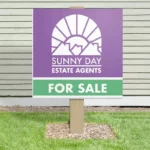
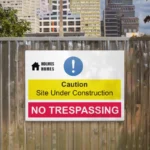
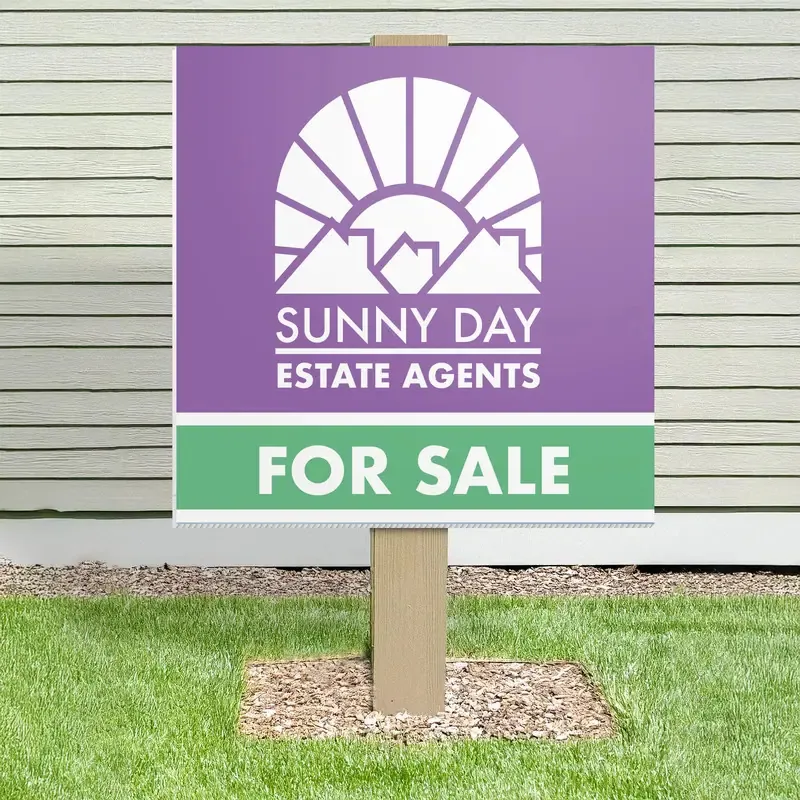
What is Correx? It is fluted (corrugated) polypropylene board: two thin plastic skins joined by rows of small channels, a bit like plastic cardboard. It is light, waterproof and economical, which is why it is the usual board for estate agent signs, building site notices, election boards and event directions.
Correx is a trade name that has become the everyday word for this kind of board, and you may also hear it called twin-wall, flute board or corrugated plastic. In short, what is Correx good at? Being cheap, light and waterproof. This article explains how it is built, which thickness to choose and how to fix it so it stays put.
What is Correx made of? #
Correx is polypropylene, the same family of plastic used for food tubs and bottle caps. The board is extruded as two flat faces with thin ribs running between them, so a cut edge shows a row of tiny tubes. That structure gives a lot of stiffness for very little weight, and because polypropylene does not absorb water, rain simply runs off the face.
The print goes onto the flat face in full colour. On our boards you can also add gloss or matt lamination on one side for extra scuff protection, but many temporary signs go without it.
Correx thicknesses we sell #
| Thickness | Where we use it | Good for |
|---|---|---|
| 3.5 mm | Correx boards, street Correx | Posters and notices fixed flat to a fence, wall or stake |
| 5 mm | Correx boards, street Correx | Bigger boards, and boards tied at the top only that need to resist flapping |
| 5.5 mm | Street Correx range | The stiffest choice on lamp-post wraps, bollard covers, triangles and fence tops |
A thicker board is stiffer, not more waterproof: all three are fully weatherproof. Go up a thickness when the board is large or only fixed along one edge.
What is Correx used for? #
- Property: For Sale and To Let boards, and letting agent notices.
- Building sites: fence signs, site rules and directions for deliveries. See our construction site signs.
- Events and campaigns: car park arrows, venue directions, election and open day boards.
- Short promotions: sale boards outside shops, garden centres and farm shops.
What these have in common is time. Correx is made for weeks and months outdoors rather than years. It does not rot, but the face can scuff, and a board that flaps in the wind will eventually crease. For a permanent sign, look at Dibond instead (see what is Dibond).
Sizes and prices #
Our standard Correx boards come in 3.5 mm or 5 mm, printed on one side or both, from these live starting prices:
| Size | From |
|---|---|
| A4 (210 × 297 mm) | £20.88 |
| A3 (297 × 420 mm) | £27.34 |
| A2 (420 × 594 mm) | £33.17 |
| A1 (594 × 841 mm) | £45.17 |
| A0 (841 × 1189 mm) | £87.50 |
Other stock sizes include 508 × 762 mm (20 × 30 in), 700 × 1000 mm and 1000 × 1000 mm, and custom sizes run from 100 mm up to 2440 × 1220 mm. Dispatch is Saver 5, Standard 3 or Express 2 working days. Each A-size also has its own page, such as A1 Correx boards.
Street Correx: shaped and folded boards #
Our street and event Correx range uses the same material for jobs a flat board cannot do. Creasing folds the board so it can wrap a post or stand as a triangle. The range includes lamp-post wraps from £16.99, venue arrow signs (550 × 210 mm) from £3.96, fence top signs, A1 triangle signs, bollard covers and Correx poster boards from £9.91. These are dispatched in 10 working days on every service, and the fence tops, triangles, lamp-post wraps and bollard covers are exempt from our oversize delivery charge.
Flute direction and why it matters #
Correx bends easily one way and resists bending the other. Along the flutes it is stiff; across the flutes it folds. That is why a tall board tied to a post at the top and bottom behaves better with flutes running vertically, and why a wide board fixed only along its top edge can curl in the wind. If direction matters for your fixing, mention it in the order notes or call us before you order.
The flutes are also useful. A cable tie or a wire stake can go straight into the channels, which is how many election and estate agent boards are mounted without drilling.
How to fix Correx #
- Fences, railings and Heras panels: choose drilled holes (top corners or all corners) and use cable ties. Tie all four corners on anything larger than A3.
- Posts and stakes: cable ties through drilled holes, or a stake pushed into the flutes.
- Walls: screws with washers through the drilled corners, or exterior double-sided tape on a clean, smooth surface.
Pull ties snug, not tight enough to dent the board. Check them after the first windy day. Our guide to fixing a sign to a wall has more detail.
What is Correx compared with Foamex and Dibond? #
In one line: Correx for weeks outdoors on a budget, Foamex for indoors, Dibond for years outdoors. The full side-by-side comparison, with a table by job, is in our Foamex, Dibond or Correx guide.
At the end of a job, Correx is polypropylene, a widely recycled plastic, but not every household collection takes rigid boards. Check with your local council or recycling centre what they accept; businesses also have a duty of care for their waste, explained in the GOV.UK guide to managing business waste.
Still not sure? #
Tell us where the board is going, how long it stays up and how you plan to fix it, and we will suggest a thickness and finish. Call 0161 315 1151 or use the contact form.