Paper or polypropylene labels: which to choose
Gloss paper for dry pre-printed labels, matt paper for ballpoint write-ons, waterproof polypropylene for outdoor, damp and handled labels.
Last updated
Choosing paper or polypropylene labels comes down to where the label will live and how you will write on it. Gloss paper is for dry, indoor labels that are fully pre-printed. Matt paper is for dry, indoor labels you fill in with a ballpoint on site. Waterproof polypropylene with a matt laminate is for anything outdoors, damp, greasy or handled a lot, and you write on it with a permanent marker.
All three materials are offered on every label in our trade and compliance labels range, at the same sizes. What changes is the pack size, the price per label and how the label copes with the conditions.
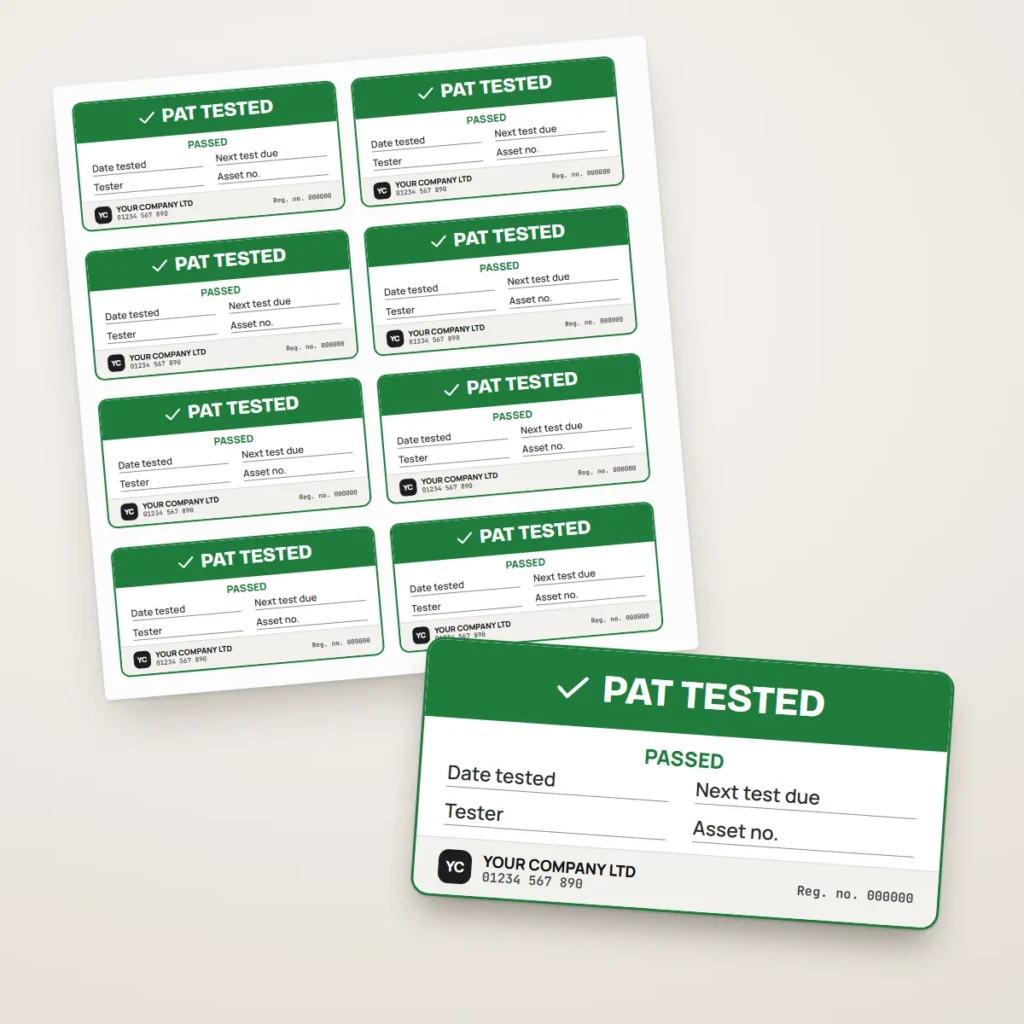
The three label materials compared #
| Material | Where | Writing on it | Typical use |
|---|---|---|---|
| Gloss paper | Dry, indoor | Not ideal; pens can smear on the gloss | Fully pre-printed labels: logo stickers, address labels, “installed by” labels with nothing to fill in |
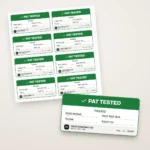
| Matt paper | Dry, indoor | Takes a ballpoint or permanent pen | PAT test labels, food rotation labels, inspection labels filled in on the day |
| Waterproof polypropylene (matt laminated) | Indoor and outdoor, damp, dusty or handled | Use a permanent marker | Outdoor units, lofts, meter boxes, vans, plant rooms, kitchens |
Every label is supplied on sheets, kiss cut and ready to peel, with a permanent adhesive. Turnaround is 7 working days to dispatch on Saver, 5 on Standard and 3 on Express.
When paper labels are the right choice #
Paper is cheaper to start with because the packs are smaller. Paper packs begin at 48 labels on most trade labels (for example PAT test pass labels and boiler service labels), at 30 on food rotation labels and allergen labels, and at 12 on custom logo stickers. That makes paper a sensible way to try a design before committing to a big run.
Choose paper when the label will stay dry: on a kettle in an office, a consumer unit inside a house, a food container in a walk-in fridge that is wiped rather than soaked, or a box in a stock room. Pick matt if anyone will write on it, gloss if nobody will.
When polypropylene is worth it #
Polypropylene is a plastic film, so water, grease and handling do not break it down the way they break down paper. With the matt laminate on top, the print is protected and a permanent marker still takes. It is the label to use on an outdoor heat pump or air con unit, a boiler in a damp garage, a ladder that lives on a van roof, or a meter box on the side of a house.
The trade-off is the pack size. Polypropylene packs start higher, and the starting pack depends on the label: 1000 on PAT test pass labels, 750 on food rotation and allergen labels, 500 on ladder inspection labels and business address labels, and 250 on boiler service and fire extinguisher service labels. The price per label falls as the pack grows, and each product page shows a price-each table next to the price.
Paper or polypropylene labels by trade #
| Trade | Label | Our suggestion |
|---|---|---|
| Electricians and PAT testers | PAT test pass and fail, RCD test | Matt paper for office and domestic kit; polypropylene for site tools and anything used outdoors |
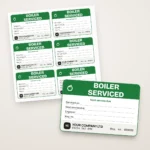
| Gas and heating engineers | Boiler service, landlord gas safety check | Polypropylene for boilers in garages, lofts and utility rooms; matt paper for dry kitchens and cupboards |
| Air con and refrigeration | F-gas, air conditioning service, heat pump service | Polypropylene, as most units sit outside |
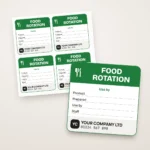
| Kitchens and food businesses | Food rotation, allergen | Matt paper for dry stores; polypropylene where containers get wet |
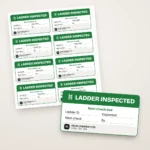
| Facilities and inspection | Ladder, asset, LOLER, out of service | Polypropylene for anything that goes on a van or outdoors |
| Any business | Logo stickers, business address labels | Gloss paper for packaging and post; polypropylene for items that get wet |
If you are torn between paper or polypropylene labels for a job that is sometimes indoors and sometimes out, go polypropylene. A label that peels or goes soft after the first wet week costs more in revisits than the pack price difference.
Label sizes #
Sizes do not change between paper or polypropylene labels, so you can switch material without redoing the artwork. The common ones are 51 × 25 mm and 62 × 33 mm for small equipment and PAT labels, 76 × 51 mm and 96 × 45 mm for service and address labels, 96 × 68 mm and 110 × 75 mm for labels with several write-on lines, 51 × 51 mm square for food labels, and a 64 mm circle for carbon monoxide alarm and MOT reminder stickers. Each product lists its own sizes, and other sizes can be quoted.
What goes on the label #
Paper or polypropylene labels from our trade range arrive with the heading and write-on lines already set, and you add your company name, phone number and, where relevant, your registration number. Scheme logos are licensed to members, so we print your registration or membership number as plain text rather than a logo. You can design in the online designer and approve exactly what you see, or upload your own file for a free file check.
A label is a visible record, not the record itself. The test, service or inspection and your paperwork are what count. For food businesses, the Food Standards Agency publishes guidance on allergen information and food safety.
Paper or polypropylene labels: quick checklist #
- Will it get wet, greasy or go outdoors? Polypropylene.
- Will someone write on it with a ballpoint indoors? Matt paper.
- Fully pre-printed and indoors? Gloss paper.
- Need a small first run? Paper has the smaller starting packs.
- Using lots each year? Compare the price each on the bigger polypropylene packs.
For bigger vinyl stickers for windows and vans, see outdoor vinyl stickers. Still unsure which material suits your labels? Contact us or call 0161 315 1151.